
The International Monetary Fund sees a long war in Iraq cutting global economic growth by up to two percentage points from a revised 2003 forecast of 3.3 per cent, Germany's Handelsblatt daily reported on Tuesday.

Amid China's economic slowdown, the country's economic challenges may increase manifold and its economy may be hit harder in the wake of the Ukraine-Russia crisis.
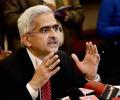
The uncertainty created by the jump in COVID-19 infections and localised lockdowns prompted RBI Governor Shaktikanta Das and other members of the rating setting panel MPC to unanimously vote for status quo in interest rates and an accommodative policy stance to support growth, as per minutes of the meeting released on Thursday. "The need of the hour is to effectively secure the economic recovery underway so that it becomes broad-based and durable," the Governor said during the three-day meeting of the Monetary Policy Committee (MPC) which ended on April 7. The renewed jump in COVID-19 infections in several parts of the country and the associated localised and regional lockdowns add uncertainty to the growth outlook, he observed, as per the minutes of the meeting released by the central bank.

The IMF on Tuesday projected an impressive 12.5 per cent growth rate for India in 2021, stronger than that of China, the only major economy to have a positive growth rate last year during the COVID-19 pandemic. The Washington-based global financial institution, in its annual World Economic Outlook ahead of the annual Spring meeting with the World Bank, said the Indian economy is expected to grow by 6.9 per cent in 2022. Notably in 2020, India's economy contracted by a record eight per cent, the International Monetary Fund (IMF) said as it projected an impressive 12.5 per cent growth rate for the country in 2021.
Growth in the region is expected to average 4.6 per cent for the year, a downward revision from the "Global Economic Prospects 2002" forecast of 5.3 per cent GDP growth.

'India has benefited from lower oil prices and remains the fastest-growing large economy in the world.'

Frosty Indo-Pak relations after the beheading of Indian soldiers by Pakistani troops were on full display in Yokohama, Japan.

Key stock indices Sensex and Nifty declined over 1 per cent at close on Monday due to heavy selling in banking, auto and FMCG shares amid weak global market trends and continued foreign fund outflows. Reversing its previous session's gains, benchmark BSE Sensex tumbled 638.11 points or 1.11 per cent to settle at 56,788.81. During the day, it tanked 743.52 points or 1.29 per cent to 56,683.40. The broader NSE Nifty fell by 207 points or 1.21 per cent to end at 16,887.35 as 42 of its constituents declined.
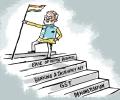
As the Ukraine conflict impacts the global GDP, India is projected to grow by 6.4 per cent in 2022, slower than the last year's 8.8 per cent but still the fastest-growing major economy, with higher inflationary pressures and uneven recovery of the labour market curbing private consumption and investment, according to a UN report. The UN Department of Economic and Social Affairs said in its World Economic Situation and Prospects (WESP) report released on Wednesday that the war in Ukraine has upended the fragile economic recovery from the pandemic, triggering a devastating humanitarian crisis in Europe, increasing food and commodity prices and globally exacerbating inflationary pressures. The global economy is now projected to grow by only 3.1 per cent in 2022, down from the 4.0 per cent growth forecast released in January 2022.

The net leasing of Grade-A commercial office space in India will stagnate this financial year at 32-34 million square feet, with global uncertainties brewing caution among key tenant categories, according to the latest Crisil Ratings report. Major seven cities in India - Bengaluru, Chennai, Hyderabad, Kolkata, Mumbai Metropolitan Region (MMR), National Capital Region (NCR) and Pune - had Grade-A office space with an operational stock of around 705 million square feet as of March 2023. India's commercial office space is dominated by technology companies, with information technology (IT) and IT-enabled services (ITeS) companies occupying 42-45 per cent of the operational stock.

Fitch Ratings on Monday said the shock to economic activity from the latest wave of COVID-19 pandemic will be less severe than the one in 2020, but recovery is likely to be delayed as economic activity dropped in April-May. The global rating agency said there are growing indications that the latest wave of COVID-19 infections will add to risks among financial institutions (FIs) and anticipates that the Reserve Bank of India (RBI) may introduce additional measures to support the financial sector if indications of economic stress mount.

S&P Global Ratings on Monday retained India's GDP growth forecast at 6 per cent saying it will be the fastest growing economy among Asia Pacific nations. The GDP growth forecast for the current and the next fiscal has been kept unchanged from the forecast made in March partly on account of domestic resilience. "We see the fastest growth at about 6 per cent in India, Vietnam, and the Philippines, S&P Global Ratings said in its quarterly economic update for Asia-Pacific.

Fast-moving consumer goods (FMCG) companies anticipate sustained volume pressures in the January-March quarter (Q4) coupled with sluggish rural growth during the period. Brokerages estimate top-line growth to be in low single digits in the quarter. Also, the late onset of winter had an impact on demand for winter products which range from moisturisers to hot beverages.
.jpg)
According to the BofA Merrill Lynch fund manager survey for October, investors are concerned that global economic recovery could falter, while emerging market confidence have started to rebuild.

Companies shipping to Europe to see rupee revenues coming under pressure.

Exports dropped 3.1 per cent in June from a year earlier, the first decline since January last year while imports went down 0.7 per cent, General Administration of Customs said on Wednesday.

The BJP state unit hailed Vasan and said his advice will be used in the coming days to guide the alliance.

The Indian economy, severely hit by the coronavirus pandemic, is projected to contract by a massive 10.3 per cent this year, the International Monetary Fund said on Tuesday. However, India is likely to bounce back with an impressive 8.8 per cent growth rate in 2021, thus regaining the position of the fastest growing emerging economy, surpassing China's projected growth rate of 8.2 per cent, the IMF said in its latest 'World Economic Outlook' report.

Indian equity markets had a good run in the first half of calendar year 2023 (CY23), with the S&P BSE Sensex and the National Stock Exchange Nifty50 hitting fresh 52-week highs. While the Sensex scaled up to a peak 64,718, the Nifty50 hit Mt 19,189. As the markets now prepare to enter the second half (H2) of CY23, all eyes are on global central banks, especially the US Federal Reserve, as to when they will pause and pivot as regards their interest-rate cycle.

The Asian Development Bank (ADB) on Wednesday slashed India's GDP growth forecast for FY23 to 7 per cent from the earlier estimate of 7.2 per cent mainly on account of higher inflation and a tight monetary policy. India's economy grew 13.5 per cent year-on-year in the first quarter of 2022-23, reflecting strong growth in services, ADB said in its second supplement to Asian Development Outlook Report 2022 (ADO 2022). "However, GDP growth is revised down from ADO 2022's forecasts to 7 per cent for FY2022 (ending March 2023) and 7.2 per cent for FY2023 (ending March 2024) as price pressures are expected to adversely impact domestic consumption, and sluggish global demand and elevated oil prices will likely be a drag on net exports," ADB said.

India's gold demand rose 8 per cent annually to 136.6 tonne in the March quarter helped by a strong economic environment despite prices touching historic highs, according to the World Gold Council. The aggressive gold buying by the Reserve Bank of India (RBI) also contributed to the rise in demand. India's gold demand in value terms rose 20 per cent on an annual basis to Rs 75,470 crore during the January-March period of this year on volume growth as well as a rise in quarterly average prices by 11 per cent.

Indian equity markets have a limited upside potential in the near-term as they negotiate the ensuing cyclical slowdown, wrote analysts at Nomura in a recent coauthored report led by Saion Mukherjee, their managing director and head of equity research for India. He, however, believes that the foundations are in place for sustainable growth over the medium-to-long term, and hence suggests a 'buy on dips' strategy to equity investors. As an investment strategy, Nomura prefers domestic-oriented sectors and companies over exporters, and prefers stocks that provide valuation comfort. Industrials and banks are their overweight sectors, while IT services and consumer discretionary are their underweight sectors.

Consumer goods firms and auto companies are witnessing an upturn in rural demand, which had been lagging for most of FY24. Expectations of a bumper rabi crop harvest have helped turn the tide. The Reserve Bank of India's (RBI's) Monetary Policy Committee kept the repo rate unchanged last week, noting that as rural demand catches up, consumption is expected to support economic growth in 2024-25.

Retail investment demand for gold bars and coins as well as central bank purchases pushed the global gold demand by 28 per cent to 1,181.5 tonnes in the September quarter, according to the World Gold Council report. The total global demand stood at 921.9 tonnes during the July-September quarter of 2021, the World Gold Council's 'Gold Demand Trends Q3 2022' showed on Tuesday. Investment was down 47 per cent year-on-year as gold backed Exchange Traded Fund (ETF) investors responded to a challenging combination of higher interest rates and a strong US dollar with significant outflows of 227 tonnes.
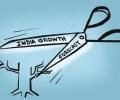
India's real GDP growth will decline marginally to 6.3 per cent in 2024 from the 6.4 per cent estimated for 2023, an American brokerage firm said on Monday. The next calendar year will be of two halves, wherein the government spending before the upcoming General Elections will be the key driver for growth, while after the elections, it will be the re-acceleration in investment growth, especially from the private sector, Goldman Sachs said in a report. From a fiscal year perspective, the brokerage said it expects growth to accelerate to 6.5 per cent for FY25 from the 6.2 per cent it has projected for the ongoing FY24, it added.

In a dazzling resurgence, foreign investors have graced the Indian equity markets with an influx of nearly Rs 1.5 lakh crore in 2023, fuelled by optimism over the country's resilient economic fundamentals amid shadows of a gloomy global scenario. Experts believe that the positive trend may continue in 2024. This follows Indian equities witnessing the worst-ever net outflow of Rs 1.21 lakh crore by FPIs in 2022 on aggressive rate hikes by the central banks globally after net inflows for three consecutive years.

Many CEOs said they plan to give special leave to women employees so as to encourage their participation in the workforce.

While India's GDP is pegged at 7.7%, China is projected to grow at 7%.

"Growth is expected to moderate gradually in China... pick up in India, and remain broadly stable in the Asean-5 region."

India's likely medium-term potential growth will almost certainly be markedly lower than that experienced in pre-pandemic years, warns Shankar Acharya, former chief economic advisor to the Government of India.

The country's gross domestic product (GDP) growth is likely to be 8.8 to 9 per cent in the current financial year, driven by agriculture and industry sectors, Care Ratings said in a report. The country's economy had contracted by 7.3 per cent in fiscal 2020-21. The agency said the outlook for the Indian economy on almost all counts in FY22 would look seemingly better than FY21 on account of the negative base effect.

Modi attended the 20th ASEAN-India Summit in Jakarta. Secretary-General of ASEAN Dr Kao Kim Hourn also attended the summit.

India, along with Southeast Asian countries such as Indonesia, is expected to sustain growth in the medium-term in Asia region, replacing China as the key growth driver, Morgan Stanley and Nomura said in two separate reports released on Monday. While Morgan Stanley projected a 6.2 per cent gross domestic product (GDP) growth forecast for India in FY24, Nomura estimated the Indian economy to grow at 5.9 per cent in 2023. "Even with a slowing China, we expect GDP growth in Asia to sustainably outperform other emerging markets and the US. India and Southeast Asia are set to be the fastest-growing economies this decade.

India's services sector activity eased in August but growth rates for new orders remain elevated, as services firms indicated the sharpest upturn in new export business which acted as a catalyst for firms to expand their workforces as well as output, a monthly survey said on Tuesday. Despite falling from 62.3 in July to 60.1 in August, the seasonally adjusted S&P Global India Services PMI Business Activity Index indicated one of the strongest increases in output seen since mid-2010. For the 25th straight month, the headline figure was above the neutral 50 threshold.

The general elections in April/May 2024 are expected to add volatility to the Indian markets, keeping investors on their toes.

The Indian aviation sector is on the cusp of a change as airlines look to induct a record number of aircraft. This, analysts said, will put the sector on a growth runway, though keeping it viable for only long-term investors. According to Vinit Bolinjkar, head of research at Ventura Securities, expectations of strong air traffic, coupled with low penetration, is the prime reason for a solid long-term outlook.

Jaishankar, who arrived in Santo Domingo on his first official visit to the Dominican Republic, also said that India has seen a dramatic expansion in connectivity, contacts, and cooperation across the region.

Amid rising geopolitical risks, a vast majority of Indian CEOs have indicated in a survey that they are reducing or planning to reduce operating costs, even as they are more upbeat than their global peers on their country's economic prospects. However, most of the companies do not plan to cut their headcount or salaries, found the annual Global CEO Survey released by consultancy giant PwC here on the first day of the World Economic Forum meeting on Monday. The survey also found that about four in ten CEOs (40 per cent of global and 41 per cent of India respondents) do not expect their companies to be economically viable in 10 years if they continue on their current path.

India is the second most optimistic nation.
India and China will remain the fastest growing economies in Asia-Pacific by expanding at respective rates of 8.7 per cent and 9.5 per cent in 2011, much above the average of the region, UN agency ESCAP said.
